
Reducing cognitive load: supporting acute care with BMJ clinical intelligence and Sayvant
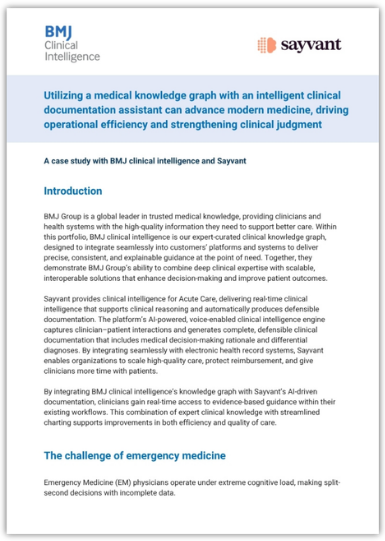
In high pressure emergency departments, clinicians often face extreme cognitive load and fragmented data from static electronic medical record systems. This case study shows how BMJ clinical intelligence and Sayvant provide live, context-aware decision support. This collaboration helps clinicians focus on clinical decisions rather than data gathering.
By combining BMJ Group’s expert curated medical knowledge graph with voice enabled AI, healthcare organisations can close diagnostic gaps and ensure evidence based care.
Why this matters for your organisation
- improve diagnostic accuracy by flagging diagnoses such as mesenteric ischemia that are frequently overlooked
- strengthen patient safety with automated drug-disease interaction checks to identify risks like renal-safe dosing or anticoagulation complications
- reduce documentation burden using automated clinical notes and problem lists, returning more time to patient care
- drive operational efficiency through protocol reinforcement and automated coding to improve throughput and charge capture
Hear about the BMJ and Sayvant partnership at ViVE 2026
Watch our presentation with Sayvant from ViVE 2026, where we discuss how BMJ clinical intelligence is being used to bring trusted, evidence based guidance into the clinical workflow, reduce cognitive burden and support clinical decision making at the point of care.
Discover the story behind BMJ clinical intelligence
Hear from Dr Comfort King as she explores the evolution from traditional evidence resources to structured, machine readable clinical intelligence, and how BMJ’s knowledge graph can help organisations bring trusted evidence into clinical tools, AI applications and workflows.